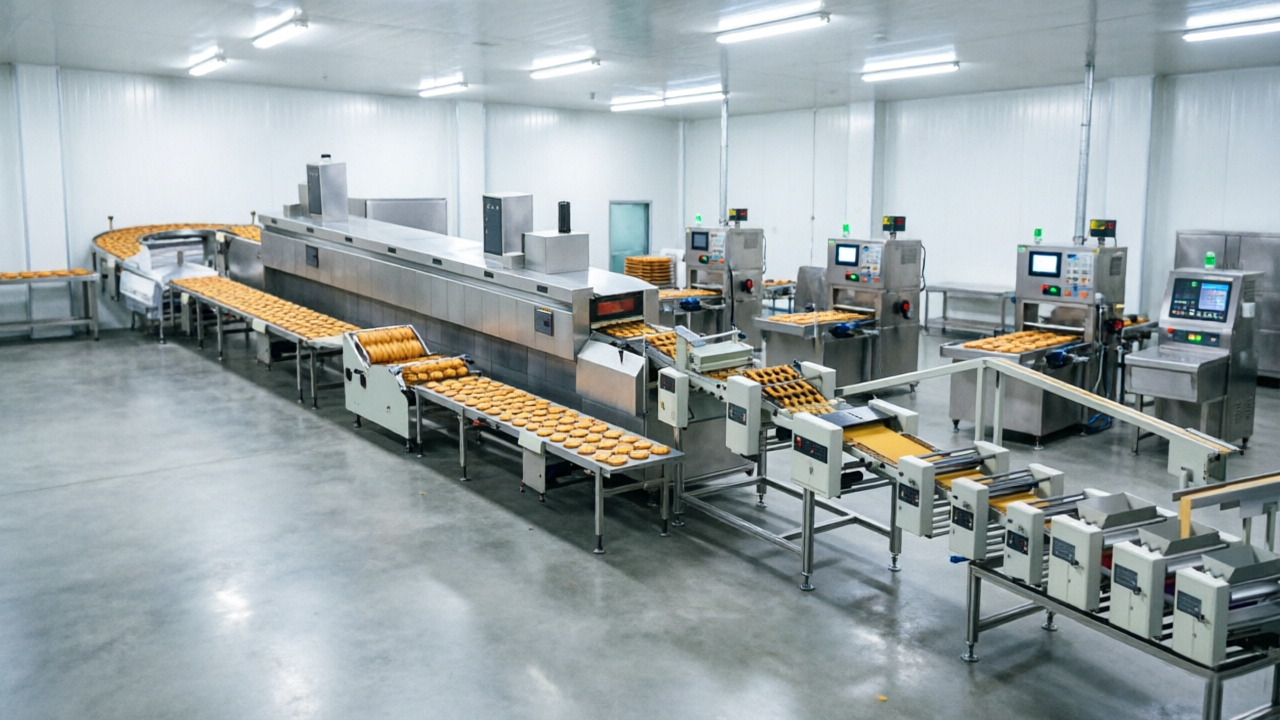

























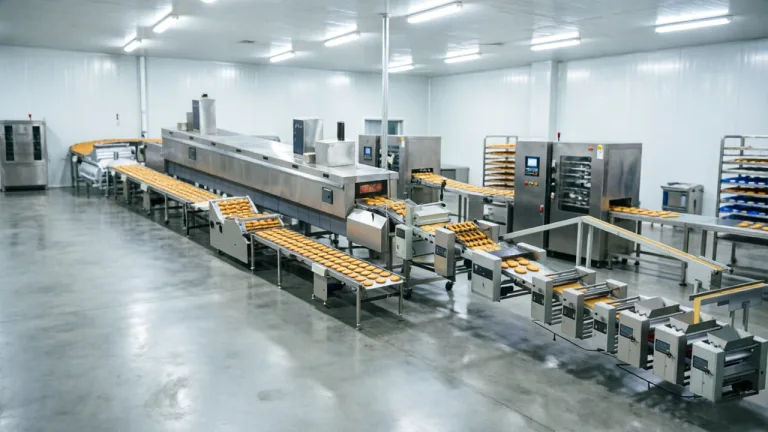
The biscuit production line is an automated food machinery equipment for biscuit processing, mainly composed of forming machines, tunnel-type hot air circulation electric baking ovens, oil sprayers, turning machines, biscuit finishing machines, biscuit sandwiching machines, packaging tables, cooling lines, and other equipment [4]. This production line adopts CPU module control and back-mounted motor drive technology to achieve full-process automated operation from feeding, three-stage dough sheeting, forming, baking, oil spraying, cooling to packaging [5-6]. The production categories cover different process types such as hard biscuits, soft biscuits, cookies, and sandwich biscuits [1-2]. Core equipment includes double-layer multi-roller sheeting units, precision mold forming systems, modular heating ovens, and forced air cooling modules [2-3]. In 1982, a domestic private enterprise successfully developed the first biscuit production line [12]. The tunnel oven temperature control range is 50-300°C, using stainless steel conveyor belts and gas/electric hybrid heating technology. The cooling line is equipped with 304 stainless steel mesh belts and variable frequency speed control systems [2] [6]. The entire line is made of food-grade stainless steel, and can be equipped with auxiliary modules such as sugar sprinklers and waste recycling machines. Some equipment supports customized mold patterns and 8-16 layer dough stacking processes [1] [3]. Modern biscuit production lines integrate vision inspection systems and intelligent warehousing technology [7].Modern biscuit production lines integrate vision inspection systems and intelligent warehousing technology, with a coated wafer biscuit production line achieving a daily output of 22.5 tons operated by only 4 workers. The proportion of artificial intelligence applications in the production line reaches 28%.